Garden of the Month – December 2025: Botanischer Garten Marburg

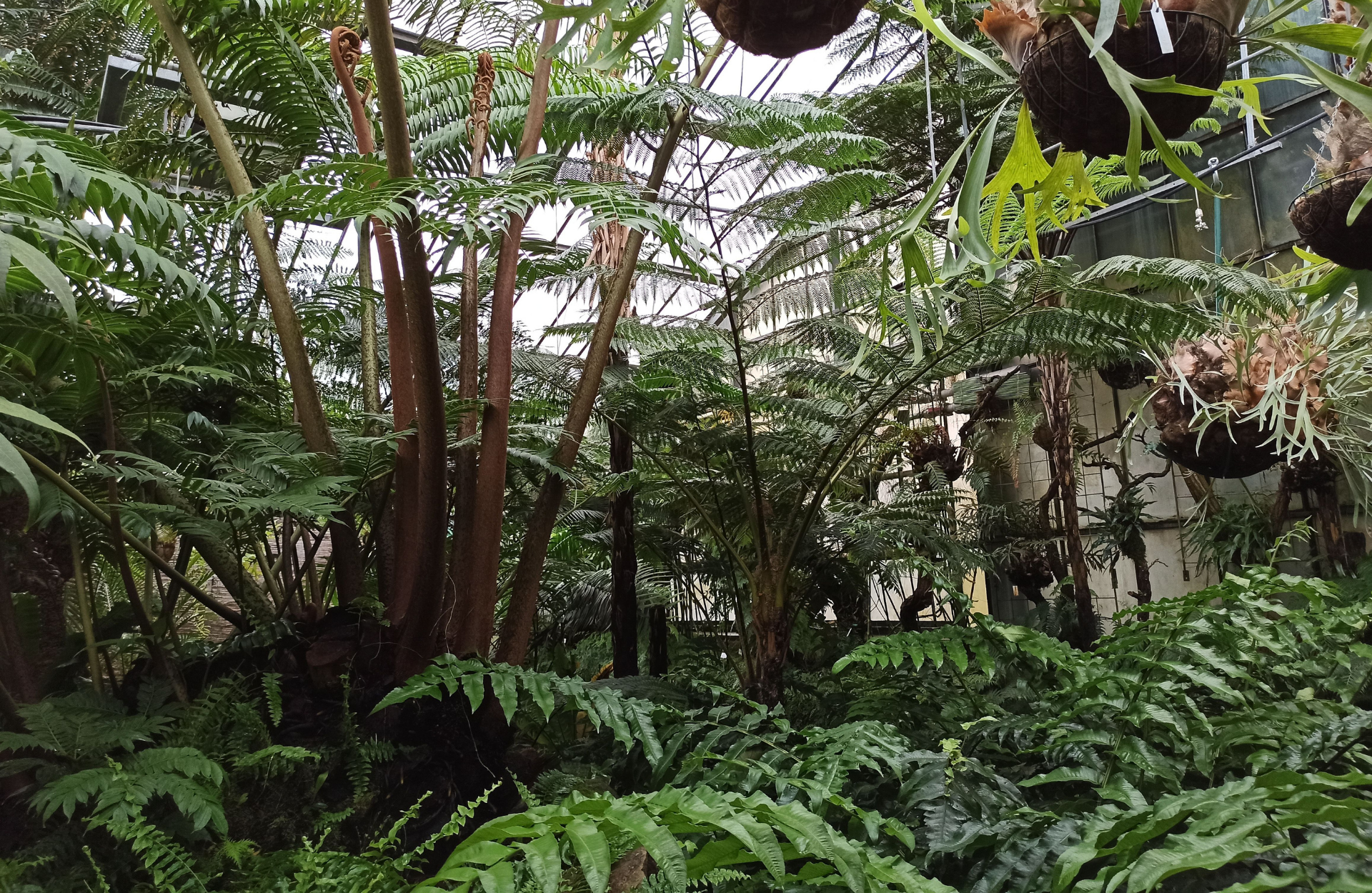
Join us this month as we travel to the Lahn Hills of Germany, where a 48-year-old botanical garden is quietly transforming nearly five decades of botanical documentation for the digital age. When you're managing 9,000 species, three greenhouse complexes totalling over 4,000 square metres, and one of Germany's most extensive fern collections, a card index system, no matter how well-maintained, eventually reaches its limits. This is the story of how Marburg's New Botanical Garden is ensuring that five decades of meticulous record-keeping will remain accessible and actionable for future plant conservation challenges.
This article was originally written in German by Lisa Kwee and Alexander Ruppel and translated into English by the Hortis Team. The original German version is provided below.
New Botanical Garden of Philipps University Marburg
Historical Overview and Mission
The New Botanical Garden in Marburg opened its gates 48 years ago. It was created between 1970 and 1977 under the design direction of Prof. Dr. Günther Grzimek on the Lahn Hills, approximately 3 km east of the city center. With an open-air area of 20 hectares and 4,000 square metres of greenhouses, it is one of the larger gardens in Germany. The new garden incorporated the extensive plant collections of the considerably smaller Old Botanical Garden, which had been located in the heart of the city for almost 240 years.
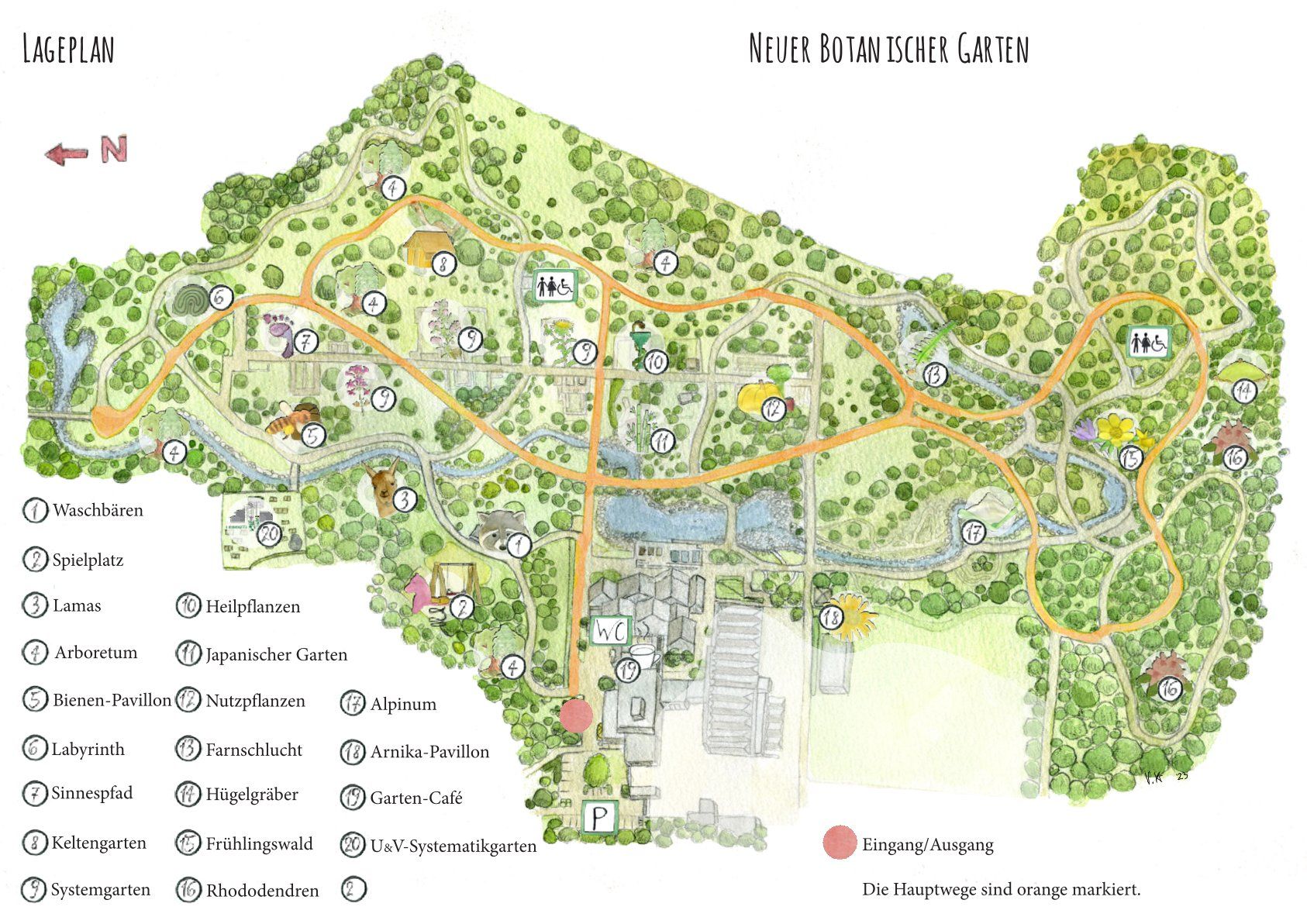
The garden is a university facility primarily dedicated to the preservation, maintenance, and development of its living collection for research and teaching, as well as the dissemination of botanical knowledge to the public. Courses in the departments of biology, geography, and pharmacy, as well as schools, make extensive use of the comprehensive living collection. Each year, the garden provides around 21,000 plant specimens for university teaching, which is used in lectures and seminars. Through the activities of the "Green School," biodiversity is made tangible and its importance is communicated to a broad public. Furthermore, the garden supports the activities of numerous national and international research institutions by providing plant material, procuring plants through international seed exchange, cultivating plants for experiments, and lending equipment for field experiments.
The garden is a member of the global organisation Botanic Gardens Conservation International (BGCI) and thus part of a worldwide network for the conservation of biodiversity, as well as a member of the Association of Botanical Gardens (VBG) in Germany. Through this umbrella organisation, the garden is dedicated to the important task of preserving regionally endangered plant species and making them available for population support measures in their natural habitats.
With its extensive plant collection, we strive to make a recognised contribution to the conservation of biodiversity.
For visitors, the New Botanical Garden also plays an important role as a place for recreation and social interaction. Throughout the year, numerous events (e.g., Tropical Night, the University Summer Festival, plant markets, a light show, a pumpkin festival, etc.), guided tours, and exhibitions take place. The garden also receives support for these events from the Friends of the New Botanical Garden of Philipps University Marburg.
The Living Collection
The living collection houses approximately 9,000 species from all branches of seed plants and almost every continent. It is divided into different sections: an outdoor area and a greenhouse area.
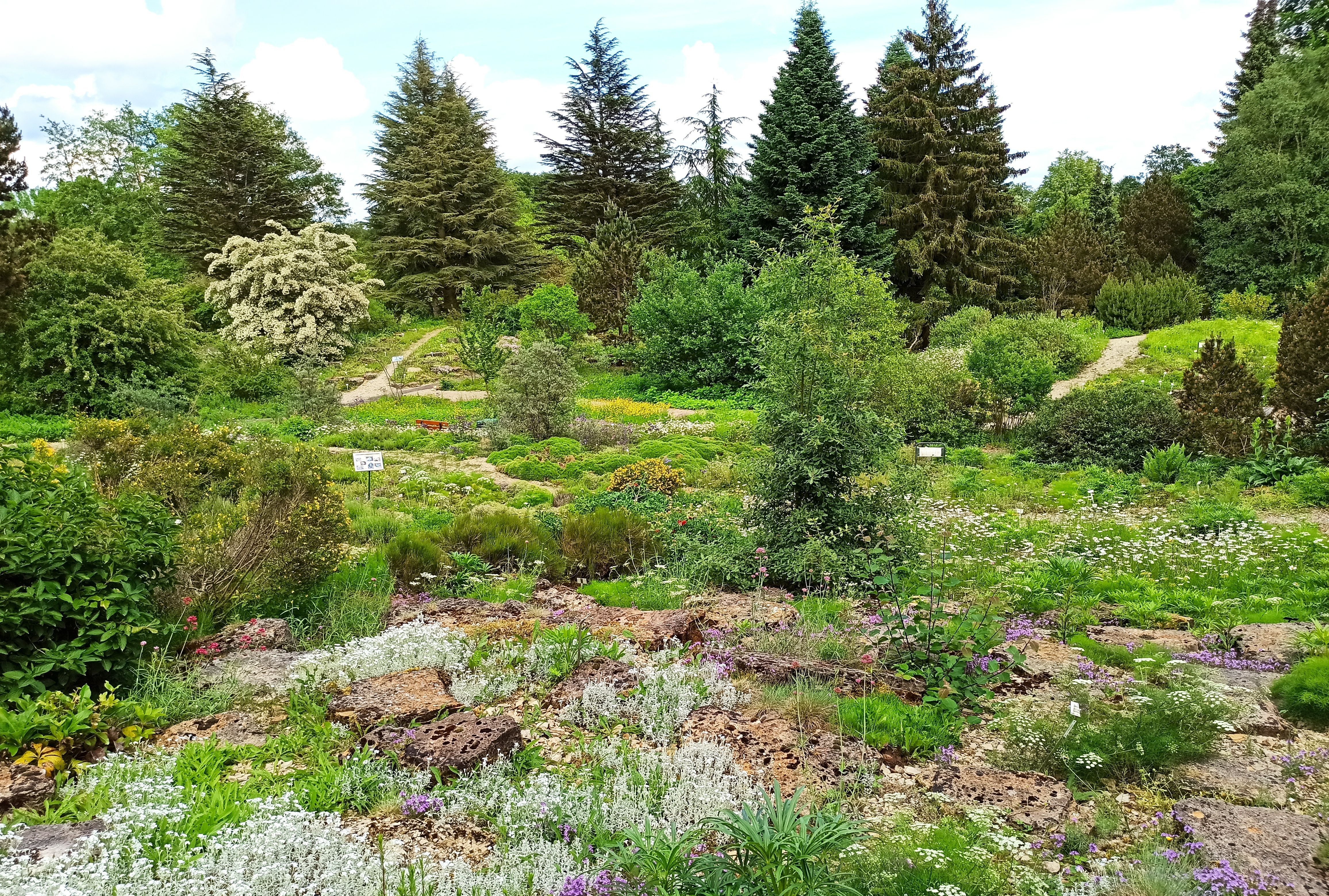
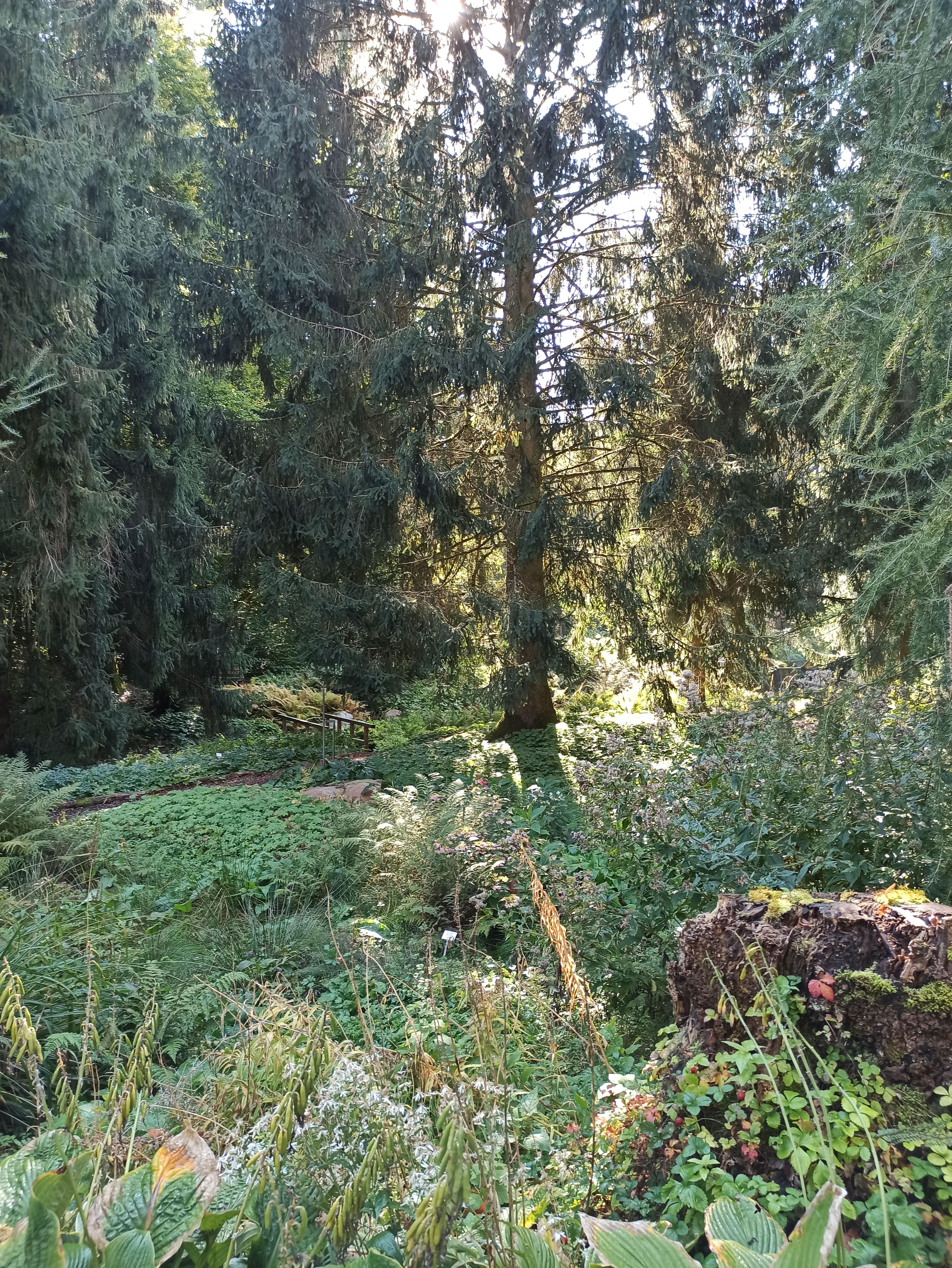
The outdoor area includes classic sections such as the arboretum, the alpine garden, the rhododendron forest, and the systematics section with medicinal and useful plants, as well as areas like the fern ravine.
In early summer, the rhododendron forest, in full bloom, attracts many visitors. From May to June, the rhododendron hybrids are particularly striking, displaying their most magnificent colors. Besides several wild species, the selection of hybrids is very extensive. These include, among others, Turkish (Rhododendron ponticum), Chinese (Rhododendron oreodoxa), and North American species (Rhododendron catawbiense). Since 2009, the garden has also participated in the German Rhododendron Gene Bank.
The Fern Gorge is considered the most diverse and extensive fern collection in Germany, boasting an assortment of more than 80 different fern species. In addition, visitors can admire over 60 fern hybrids and varieties along the numerous paths, some of which are unpaved.
The garden also features biological groups, a spring forest, and special areas such as the burial mounds and the Celtic garden.
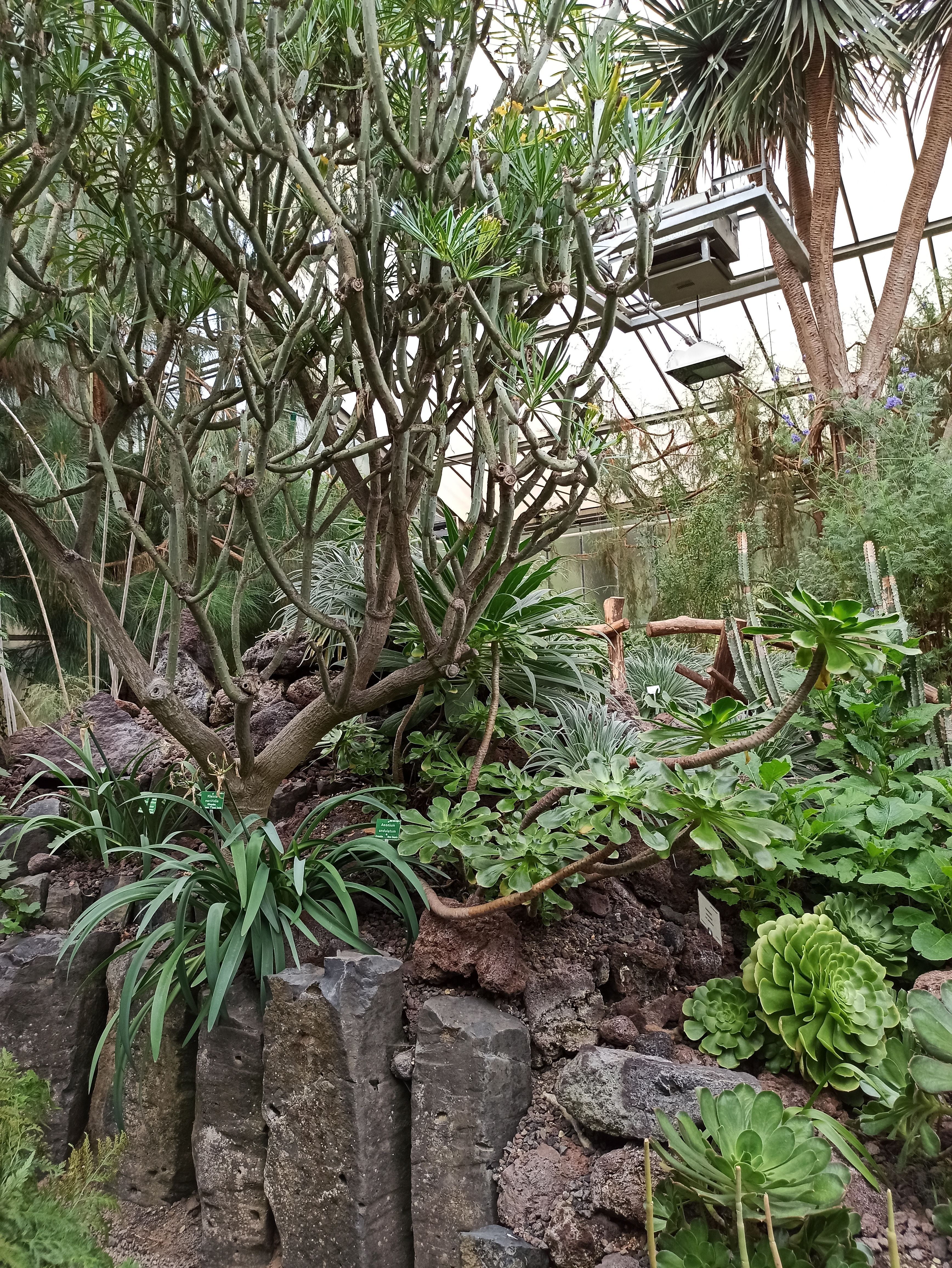
The display greenhouses (2,000 square metres) are open to the public, as is the outdoor area. They showcase the diversity of non-European plants. This area includes the Tropical House, the Australian House, the Canary Islands House, the Succulent House, the Fern House, the Aquatic Plant House, the Crop Plants House, and the Carnivorous Plant House.
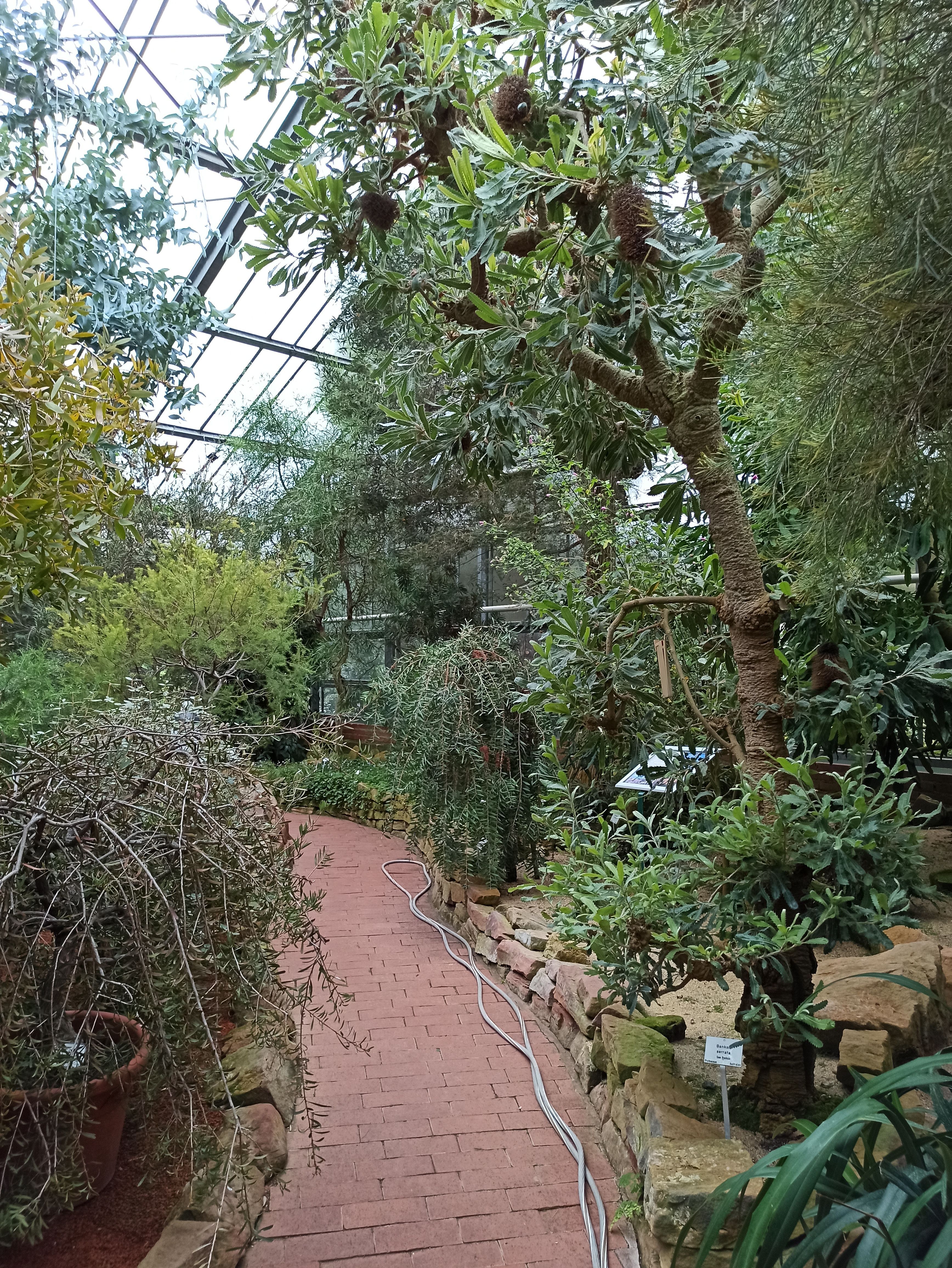
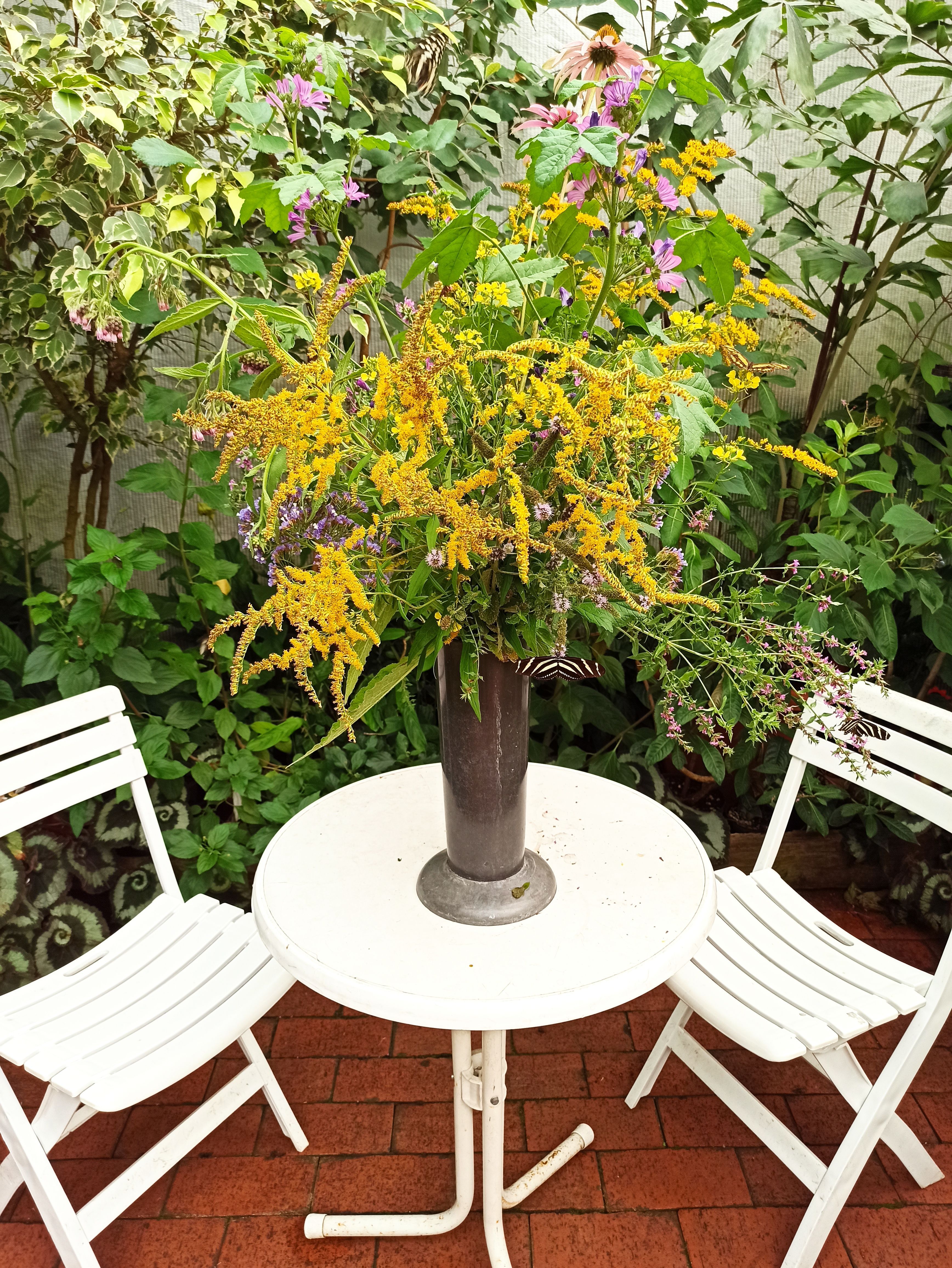
Furthermore, the garden has had a Butterfly House since 2005. It is connected to the Tropical House and is open during the summer months from mid-May to mid-October. The exhibition features plants and butterflies from Central and South America.
The 2,000 square metre greenhouses (propagation and collection houses), which are not open to the public, are home to the valuable scientific plant collections. These collections consist of plants originating from documented wild locations and have special taxonomic, historical, geographical, or genetic value. The garden boasts, for example, one of the largest tropical orchid collections.
To ensure the greenhouses are energy-efficient for the future (and to guarantee the preservation of the collection), construction of new, non-public greenhouses began two years ago. The project is scheduled for completion in 2026.
Herbarium and Specialist Library
The New Botanical Garden houses a "garden herbarium", currently with more than 6,000 specimens, which complements the living collection. It is part of the Herbarium Marburgense, with approximately 300,000 specimens, housed in the adjacent Department of Biology. The herbarium documents pressed dried specimens of many of the available accessions, including characteristics relevant for identification, such as flowers and fruits.
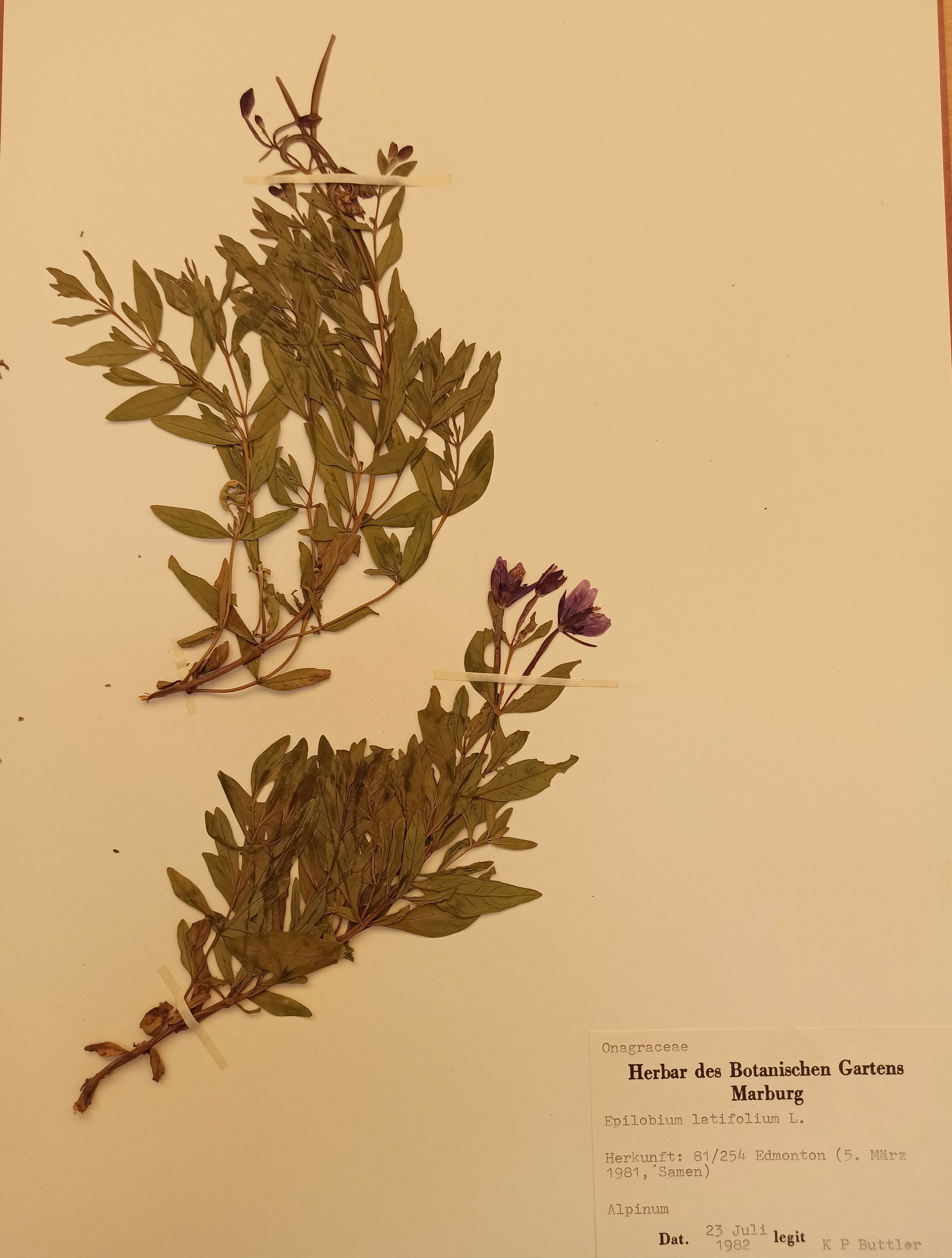
The herbarium also includes a specialist library with a collection of approximately 4,000 books. In addition to general reference works, monographs, and specialist journals, geographically organised floras are also available, such as the Flora of Ecuador and the Flora Zambesiaca.
These are indispensable for the scientific management of the plant collection, as the specimens and floras allow for the necessary verification to be carried out much more quickly.
Documentation of the Inventory
The garden's inventory currently comprises approximately 11,000 accessions and 9,000 species. It has been documented in a central card index since the 1970s. The digital transfer of the data to index cards in the 1980s further ensured optimal organisation.
In the 1990s, the then Technical Director developed a dedicated database for the digital recording of the inventory, enabling even more efficient data management.
For the past two years, the garden has been using the Hortis database. A complete data transfer, essential for creating the seed catalogue and for seed exchange, has not yet been finished. Therefore, parallel use of both databases remains necessary. In the future, colleagues will use the database to directly check accessions in the field, make changes, and supplement the entries with images.
The Digital Transition
Managing a collection of this scale and diversity presents unique challenges. From the rhododendron forest's participation in the German Gene Bank to maintaining one of Germany's most extensive fern collections, accurate documentation isn't just administrative; it's critical for conservation, research, and international collaboration. This is where Marburg's approach to record-keeping becomes particularly relevant.
Looking forward
Marburg's transition to Hortis represents more than just adopting new software; it's about ensuring that decades of botanical knowledge remain accessible and actionable for future generations. As the garden completes its greenhouse renewal project in 2026 and finalises its data transition, it joins a growing international community of botanical institutions which recognise that preserving plant diversity also requires preserving the data that documents it. The future of botanical conservation is founded as much on collaboration and quality plant collections as it is on reliable data.
Below is the original German version as written by the authors.
Neuer Botanischer Garten der Philipps-Universität Marburg
Historischer Überblick und Aufgaben
Der Neue Botanische Garten Marburg hat seine Tore vor 48 Jahren geöffnet. Im Zeitraum von 1970-1977 entstand er unter gestalterischer Leitung von Prof. Dr. Günther Grzimek auf den Lahnbergen rund 3 km östlich der Innenstadt. Mit einer Freilandfläche von 20 Hektar und 3100 Quadratmeter Gewächshäusern, zählt er zu den größeren Gärten in Deutschland. Mit der Neuanlage des Gartens wurden die reichen Pflanzenbestände des deutlich kleineren Alten Botanischen Gartens, der sich seit fast 240 Jahren mitten in der Stadt befindet, dorthin umgesiedelt.
Der Garten ist eine universitäre Einrichtung und dient in erster Linie der Erhaltung, Pflege und Weiterentwicklung der Lebendsammlung für Forschung und Lehre sowie der botanischen Wissensvermittlung an Interessierte. Lehrveranstaltungen der Fachbereiche Biologie, Geologie und Pharmazie sowie Schulen nutzen intensiv die umfangreiche Lebendsammlung. Der Garten stellt jedes Jahr Pflanzenmaterial für die universitäre Lehre zur Verfügung, das im Rahmen von Vorlesungen und Seminaren verwendet wird. Über die Aktivitäten der „Grünen Schule“ werden biologische Vielfalt erfahrbar und deren Bedeutung einer breiten Öffentlichkeit vermittelt. Darüber hinaus unterstützt der Garten die Aktivitäten vieler in- und ausländischer Forschungseinrichtungen durch die Bereitstellung von Pflanzenmaterial, die Beschaffung von Pflanzen im Rahmen des internationalen Saatgutaustauschs, die Anzucht von Pflanzen für Experimente sowie den Einsatz von Geräten in Feldexperimenten.
Der Garten ist Mitglied im globalen Zusammenschluss Botanic Gardens Conservation International (BGCI) und damit Teil eines weltweiten Netzwerks zur Erhaltung der biologischen Vielfalt als auch Mitglied des Verbandes Botanischer Gärten (VBG) in Deutschland. Über diesen Dachverband widmet sich der Garten der wichtigen Aufgabe, regional gefährdete Pflanzenarten zu erhalten und für populationsstützende Maßnahmen am Wildstandort bereitzustellen.
Mit der umfangreichen Pflanzensammlung versuchen wir einen anerkannten Beitrag zur Erhaltung der biologischen Vielfalt zu leisten.
Für Besucherinnen spielt der Neue Botanische Garten auch eine wichtige Rolle als Erholungs- und Begegnungsort. Im Laufe des Jahres finden zahlreiche Veranstaltungen (z. B. die Tropennacht, das Unisommerfest, Pflanzenmärkte, eine Lichtillumination, ein Kürbisfest etc.), Führungen und Ausstellungen statt. Bei den Veranstaltungen wird der Garten zusätzlich vom Freundeskreis des Neuen Botanischen Gartens der Philipps-Universität Marburg e. V. unterstützt.
Die Lebendsammlung
Die Lebendsammlung beherbergt etwa 9000 Arten aus allen Verwandtschafts-bereichen der Samenpflanzen und fast allen Kontinenten der Erde. Er ist in verschiedene Bereiche aufgegliedert: einen Freiland- und einen Gewächshaus-bereich.
Zum Freiland gehören klassische Abteilungen wie das Arboretum, das Alpinum der Rhododendrenwald und die Systematik mit den Heil- und Nutzpflanzen, aber auch Orte wie die Farnschlucht.
Im Frühsommer lockt der in voller Blüte stehende Rhododendrenwald die Besucher und Besucherinnen an. Von Mai bis Juni zeigen sich besonders die Rhododendren-Hybriden in den prächtigsten Farben. Neben einigen Wildarten ist das Sortiment von Hybriden sehr umfangreich. Zu diesen gehören unter anderem türkische (Rhododendron ponticum), chinesische (Rhododendron oreodoxa) und nordamerikanische Arten (Rhododendron catawbiense). Seit 2009 beteiligt sich der Garten auch an der Deutschen Genbank Rhododendron.
Die Farnschlucht gilt als arten- und individuenreichste Farnsammlung in Deutschland. Sie weist ein Sortiment von mehr als 80 verschiedenen Farnarten auf. Zusätzlich kann man entlang der zahlreichen, zum Teil auch nicht befestigten Wege mehr als 60 Farnhybriden und Farnvarietäten bestaunen.
Daneben präsentiert der Garten noch die Biologischen Gruppen, den Frühlingswald und besondere Orte wie die Hügelgräber und den Keltengarten.
Die Schaugewächshäuser (1500 Quadratmeter) sind ebenfalls wie der Freiland-bereich für die Öffentlichkeit zugänglich. Sie machen die Vielfalt außereuropäischer Pflanzen erfahrbar. Zu dem Bereich zählen das Tropenhaus, das Australienhaus, das Kanarenhaus, das Sukkulentenhaus, das Farnhaus, das Wasserpflanzenhaus, das Nutzpflanzenhaus sowie das Karnivorenhaus.
Darüber hinaus verfügt der Garten seit 2005 über ein Schmetterlingshaus. Es ist an das Tropenhaus angeschlossen und in den Sommermonaten ab Mitte Mai bis Mitte Oktober geöffnet. Gezeigt werden Pflanzen und Schmetterlinge aus Mittel- und Südamerika.
Die 1600 Quadratmeter großen nicht öffentlich zugänglichen Gewächshäuser (Anzucht- und Sammlungshäuser) sind das Zuhause der kostbaren wissenschaftlichen Pflanzensammlungen. Die Sammlungen bestehen aus Pflanzen, die von einem dokumentierten Wildstandort abstammen und einen besonderen taxonomischen, historischen, geographischen oder genetischen Wert haben. Der Garten verfügt zum Beispiel über eine der größten tropischen Orchideensammlungen.
Um die Häuser energetisch zukunftssicher zu machen (und die Erhaltung des Bestandes zu gewährleisten), wurde vor zwei Jahren mit dem Neubau der nicht öffentlichen Gewächshäuser begonnen. Die Baumaßnahmen sollen im kommenden Jahr 2026 abgeschlossen sein.
Herbarium und Fachbibliothek
Der Neue Botanische Garten beherbergt ein „Gartenherbarium“ mit derzeit mehr als 6000 Belegen, welches die Lebendsammlung ergänzt. Es ist Teil des Herbarium Marburgense, mit rund 300.000 Belegen, das im benachbarten Fachbereich Biologie aufbewahrt wird. Im Herbarium werden gepresste Trockenpräparate vieler der vorhandenen Akzessionen mit für die Bestimmung relevanten Merkmalen, u.a. Blüten und Früchten, dokumentiert.
Das Herbarium umfasst zudem eine Spezialbibliothek mit Fachliteratur und weist einen Bestand von etwa 4000 Büchern auf. Neben allgemeinen Nachschlage-werken, Monographien sowie Fachzeitschriften sind auch geographisch geordnete Florenwerke vorhanden, z. B. die Flora von Ecuador oder die Flora Zambesiaca.
Diese sind für die wissenschaftliche Pflege des Pflanzenbestandes unabdingbar, denn mit Hilfe der Belege und Florenwerke lässt sich eine immer wieder notwendige Verifizierung sehr viel schneller durchführen.
Dokumentation des Bestandes
Der Bestand des Gartens umfasst derzeit etwa 11000 Akzessionen und 9000 Arten. Er wurde seit den 1970er Jahren in einer zentralen Kartei dokumentiert. Die digitale Übertragung der Daten in den 1980er auf Karteikarten garantierte dann zusätzlich eine optimale Übersicht.
In den 1990er Jahren entwickelte der damalige Technische Leiter eine eigene Datenbank für die digitale Erfassung des Bestandes, die ein noch effizienteres Management der Daten ermöglichte.
Seit zwei Jahren nutzt der Garten nun die Datenbank Hortis. Eine vollständige Übertragung der Daten, die unter anderem für die Erstellung des Saatgutkatalogs und für den Saatgutaustausch unerlässlich sind, ist noch nicht abgeschlossen. Daher ist eine parallele Nutzung beider Datenbanken nach wie vor notwendig. Zukünftig soll die Datenbank von Kolleginnen genutzt werden, um im Gelände direkt Akzessionen zu überprüfen und Änderungen vorzunehmen sowie die Eintragungen mit Bildern zu ergänzen.
Verfasser: Lisa Kwee und Alexander Ruppel