What Is Accessioning? A Practical Introduction

Introduction
If you have spent time working in a botanic garden, you have likely encountered the word “accession”, perhaps on a label, in a database, or in conversation with a curator. Yet for many new to collection management, the concept can seem abstract or unnecessarily bureaucratic. In reality, accessioning is one of the most practical tools available for managing a living plant collection, and understanding it is essential for anyone who wants their garden to function as more than just a pleasant arrangement of plants.
This article provides a plain-language introduction to accessioning: what it is, where it comes from, and why it matters. No prior experience with collection management systems is required.
Why Record Keeping Matters in a Botanic Garden
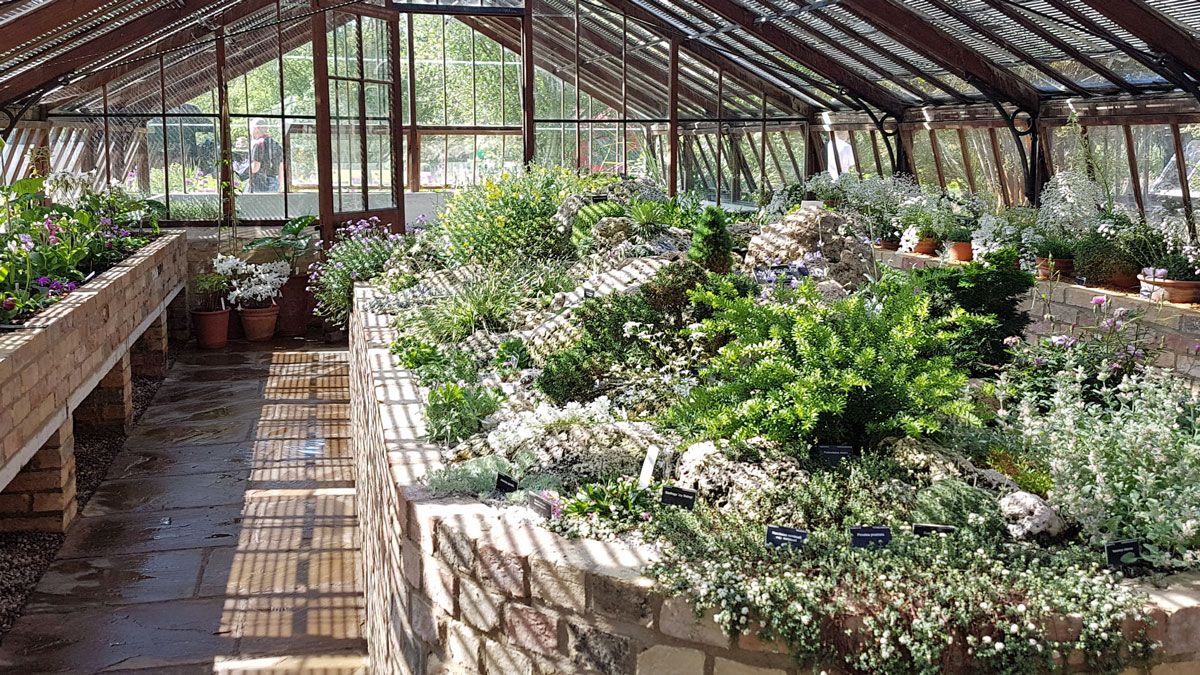
A botanic garden is not simply a garden. It is a living repository of botanical and horticultural knowledge. A curated collection that serves purposes ranging from scientific research and conservation to education and heritage. To fulfil this role, those who manage the collection need reliable answers to three fundamental questions about every plant in their care: What is it? Where did it come from? And where is it now?
Without this information, a plant is just a plant. It may be beautifully grown, rare, or scientifically significant, but without documented provenance and identity, its value to research, conservation programmes, or future exchange with other institutions is severely diminished. Reliable record keeping is what transforms a garden into a botanic garden.
What Is an Accession?
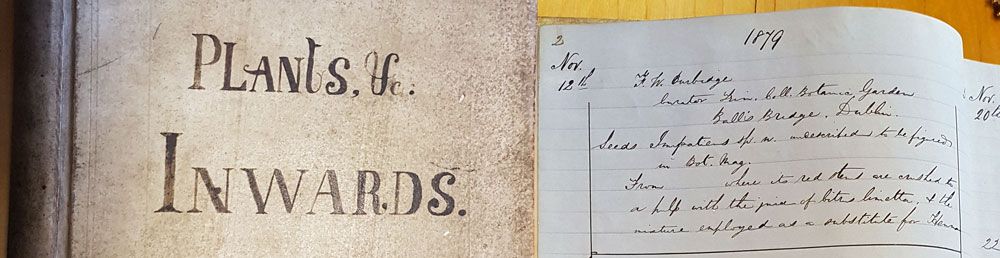
The term “accession” comes from the practice of formally recording acquisitions. It originated in museum practice, where objects entering a collection are given a unique identifier and a documented record. Botanic gardens have adopted the same principle for their living and preserved plant collections.
An accession is the record created whenever new plant material is received, whether through purchase, donation, seed exchange, field collection, or propagation. Each accession captures the essential details of that acquisition: what was received and where it came from. Every accession is assigned a unique accession number, which allows the material to be tracked throughout its time in the collection.
The most widely used format for accession numbers in botanic gardens combines a four-digit year with a sequential number, for example, 2024-0001, 2024-0002, and so on. This approach makes it straightforward to identify when a plant entered the collection and how many acquisitions were made in a given year.
Scientific Names and the Concept of a Taxon
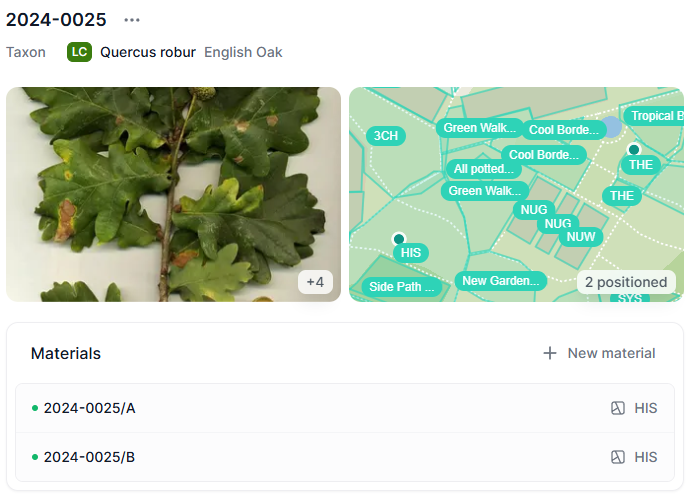
Each accession is assigned a scientific name that identifies exactly what was acquired. Scientific names, such as Quercus robur (Also known as English oak), are used in preference to common names because they are universal. Unlike common names, which vary by language and region, a scientific name refers to the same plant wherever you are in the world. This precision is essential when sharing records with other institutions or contributing data to international databases.
Closely related to scientific names is the term taxon (plural: taxa). A taxon is simply a named group of plants identified by a scientific name. In the context of botanic garden collections, this most commonly means a species, so when you encounter the word taxon, you can generally think of it as a plant species described by a scientific name. Understanding this term will help you navigate collection management systems such as Hortis and professional literature with greater ease.
Plant Material: Tracking What You Have
Within each accession, one or more plant material records are created. A plant material record represents the physical item held in the collection, a living plant, a batch of seeds, a cutting, or other physical material. It is in the plant material record that the ongoing life of the acquisition is tracked: its current location in the garden, its condition, and ultimately its fate when it leaves the collection.
In many cases, an accession will contain a single plant material. However, if multiple items of the same species are received from the same source at the same time, they may be recorded under a single accession. An important distinction applies here: if items of the same species arrive from different genetic sources, different wild collection localities, for example, or different donor gardens, good practice dictates that they be recorded as separate accessions. The origin of plant material is a core part of what makes an accession record scientifically and horticulturally valuable. Treating genetically distinct material as a single accession would obscure information that may later prove critical for conservation or research purposes.
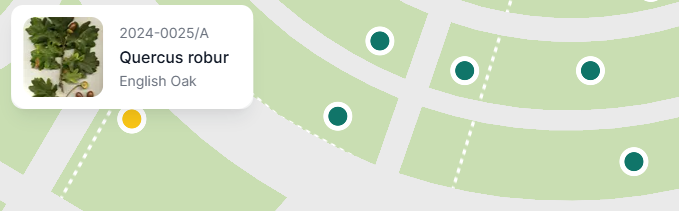
To track individual plant materials within an accession, it is standard practice to assign each one a unique identifier, commonly called a qualifier. This identifier may be numeric (e.g., 1, 2, 3) or alphabetic (e.g., A, B, C), allowing each individual to be clearly distinguished within the accession. In the example below, the individual plant is identified in full with the accession number and qualifier 2024-0025/A.
Getting Started with Accessioning
Implementing an accessioning system does not require a large team or sophisticated infrastructure to begin with. The core principles are straightforward: assign a unique number to each acquisition, record what it is and where it came from, and maintain the record as the material moves through the collection. Even a modest spreadsheet, consistently maintained, represents a meaningful step towards safeguarding important institutional knowledge.
However, spreadsheets and other basic solutions tend to become limiting as a collection grows. Tracking movements, recording condition changes, generating labels, and querying the collection across multiple fields quickly becomes cumbersome without purpose-built tools. That is where a professional collection management system such as Hortis becomes valuable. Hortis is designed to serve both institutions with a long record-keeping tradition, as well as those that are new to professional collection management.
Further Reading
To learn more, we encourage you to explore our getting started guide, sign up for a free trial, or read stories on our blog from gardens that have made the transition to Hortis.
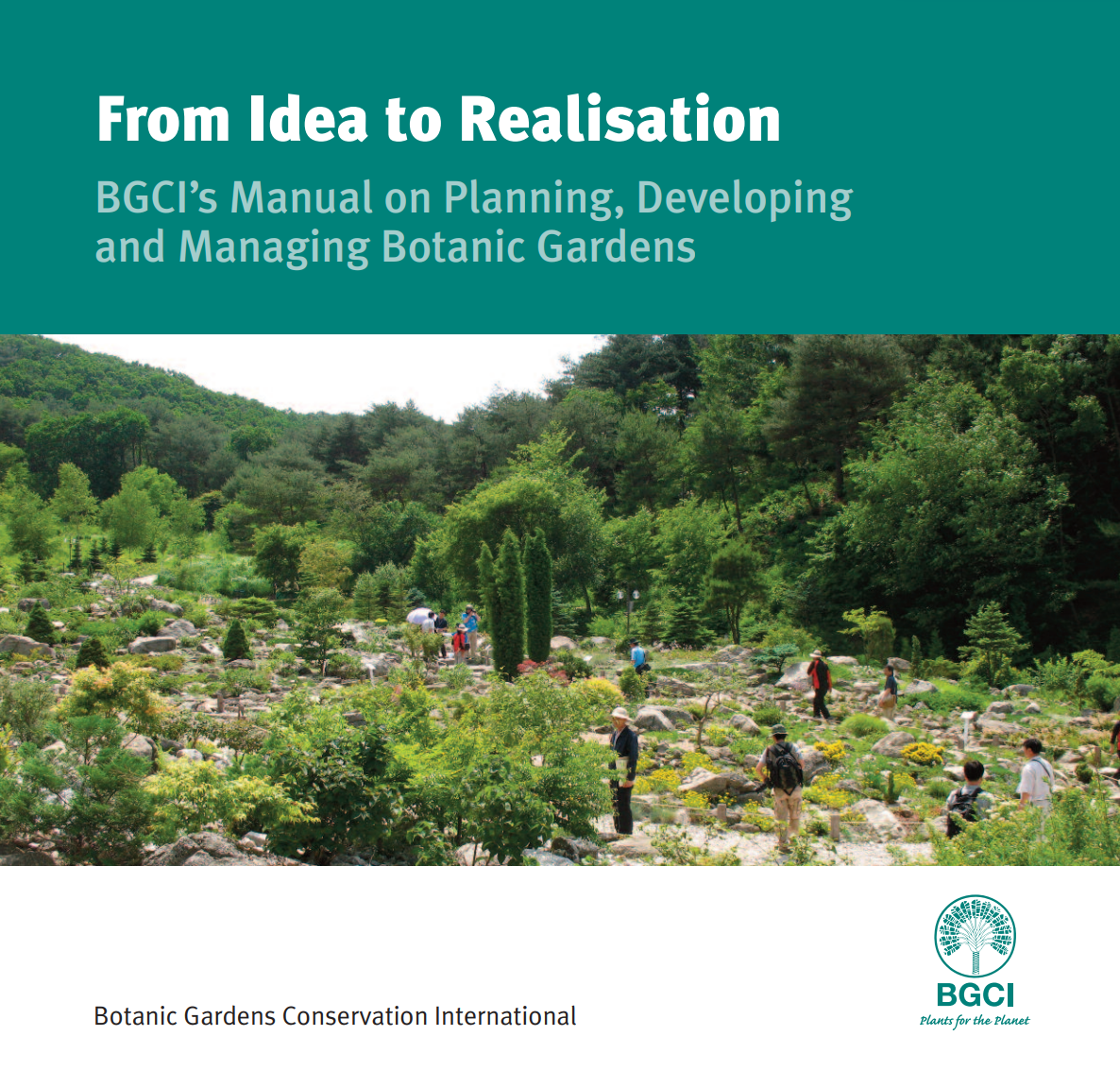
For a comprehensive guide to collection management practice, the Botanic Gardens Conservation International (BGCI) manual is an authoritative and freely available resource:
BGCI’s Manual on Planning, Developing and Managing Botanic Gardens covers collection policy, documentation standards, and best practices for botanic garden management across all scales of institutions.